Overview
Seasonal pricing is one of the most effective ways to improve revenue while maintaining healthy occupancy levels. Instead of using the same nightly rate throughout the year, successful RV park owners adjust prices based on demand, local events, holidays, and weather conditions.
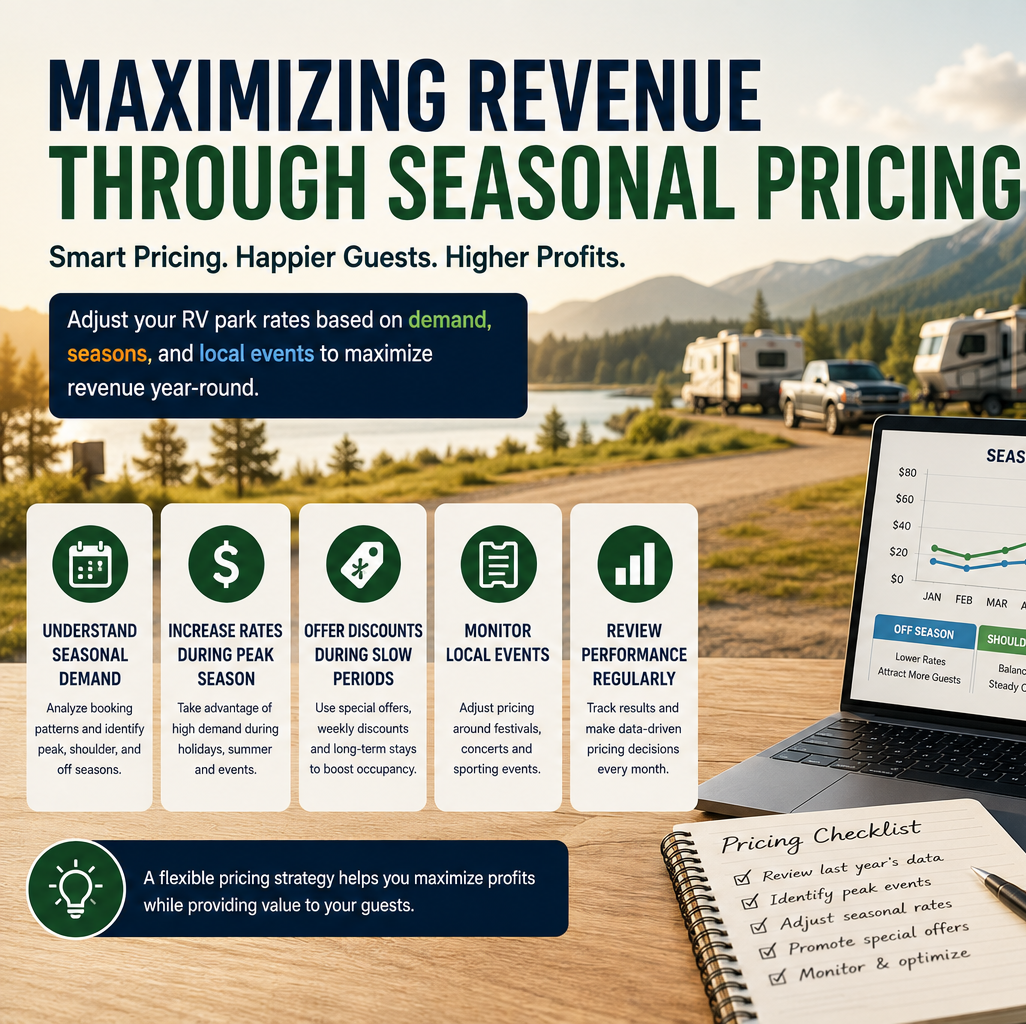
- Understand Seasonal Demand
Track booking patterns from previous years to identify your peak, shoulder, and off seasons. Historical data helps predict customer demand and set competitive prices.
- Increase Rates During Peak Season
When demand is high, slightly increasing nightly rates can significantly improve overall revenue. Guests are often willing to pay more during holidays, festivals, and summer vacations.
- Offer Discounts During Slow Periods
Lower demand doesn't always mean lower profits. Weekly discounts, extended-stay offers, and promotional packages can encourage longer bookings and reduce empty sites.
- Monitor Local Events
Concerts, sporting events, and regional festivals often create temporary spikes in demand. Updating prices before these events allows your park to capture additional revenue.
- Review Performance Regularly
Evaluate occupancy rates, average daily revenue, and guest feedback every month. Small pricing adjustments based on real data will produce better long-term financial results than fixed pricing throughout the year.
Conclusion
A flexible seasonal pricing strategy helps RV park owners maximize profits while remaining competitive. Regular market analysis and timely price adjustments create a better balance between occupancy and revenue growth.
